


After nourishment, shelter and companionship, stories are the thing we need most in the world.” – Phillip Pullman
Writing
Our intent
Our curriculum for Writing aims to develop learners who can write down their ideas fluently and accurately. Most importantly to enthuse our children with a love of writing that will stay with them lifelong. We aim for writers who:
- Understand the purpose of their writing and their audience, communicating their ideas clearly and effectively.
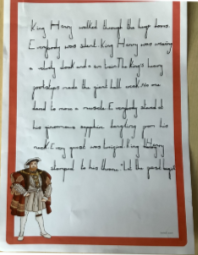
- Develop handwriting that enables pupils to write at increased speed and is clear to read.
- Spelling and punctuation that is used accurately and enhances the writing.
To develop pupils’ oracy skills, that is their use of spoken language encouraging pupils to communicate ideas clearly, develop their vocabulary and use of expression (oracy is taught in all areas of the curriculum, not just English).
What pupils will learn
EYFS: develop a love of writing through “Drawing Club”, develop transcription skills (holding a writing tool, spelling)

Year 1: to develop an understanding of sentences, starting with simple sentences Jonathan Lear’s sentence slides as described in his book The Monkey-Proof Box.
Year 2: extending writing, introducing compound sentences
Year 3: introducing complex sentences
Year 4: consolidating the 4 main sentence types and fronted adverbials
Year 5: developing confident writers, using a range of punctuation, encouraging choice and independence
Year 6: consolidating previous learning, ensuring that writing is effective (meets the purpose), further developing choice and independence
How we teach Writing
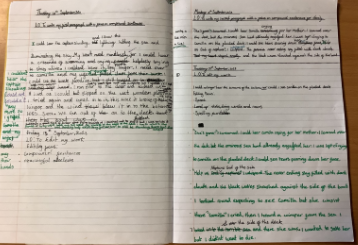
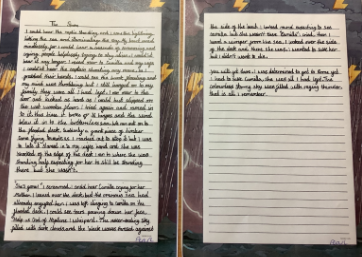
Teaching follows the same process from Y1 through to Y6. Pupils are introduced to a model text (an example of the genre of writing they will be doing themselves). Writing is discussed together, including what makes the writing successful (co-created success criteria). Teachers then model writing to pupils, before pupils write independently using the skills they have been taught. Pupils are then encouraged to review what they have written both for accuracy (proofreading) and effectiveness (editing).
Writing is linked to other curriculum areas whenever possible e.g. writing instructions to go alongside a DT project. This ensures an authentic purpose for the writing. When writing fiction (such as stories) teachers make links to quality texts already accessed through Master Reader.
Spelling is taught daily using the Read Write Inc Spelling programme. .


Assessment and progress
Writing is assessed by teachers on an ongoing basis against the subject skills progression document. Teachers have regular opportunities to assess writing alongside colleagues from other schools in the Hurst Education Trust. At the end of Key Stage 2, writing is assessed using the Teacher Assessment Framework.
Meeting individual needs
Writing is scaffolded according to pupils’ individual needs. The types of support pupils may receive include:
- Handwriting and fine motor skill interventions
- Widgets – dual coding pictures to support vocabulary understanding
- Shared writing – teacher led group for those not ready to write independently
- Sentence starters – support with initial ideas and getting started
- Specialist small group provision in “The Nest” for those working significantly below the expected standard in English
We also provide termly greater depth workshops for those writers working above the expected standard in Year 6.
How parents and carers can help at home
- Read with your child, great writers need ideas and reading fuels these!
- Practice oracy skills at home, encourage your child to hold conversations that require listening and responding clearly and with expression
- Practice spellings sent home as homework
- Play word games like Scrabble and Boggle together
- Give opportunities for your child to write e.g. your shopping list or a letter to a relative.
Resources & useful links
Documents to download
Our Writing Skills Progression document can be view by clicking here
When asked what they like about writing our pupils replied:
Year 2 – “creativity”, “it makes me calm because its quiet”, “I can write everything down”
Year 3 – “making up stories”, “working hard”, “making up your own creatures,” “publishing”
Year 4 – “fun, exciting lessons”,” funny videos”, “we write all together first, so it gives me more courage,” “I get to use my ideas in the independent write”, “lots of cool ideas from the teacher to write my stories.”
Year 5 – “creativity”, “anyone can do it ”
Year 6 -” you get to do your own ideas (you get to drive your own car as Mr Stenning puts it)”, “creating your own ideas”, “getting ideas from each other”,” you can choose what to research and how to present it.”
Subject lead
Rachel Goodenough
Last reviewed 13.03.26 / RG