Our Curriculum
St Peters is a distinctively Christian school, at the centre of a thriving community, where children discover God’s love as we equip them to grow in resourcefulness, resilience, respect and the courage to aim high. Through outstanding learning opportunities, and our inclusive approach, our vision is to unlock the potential in everyone.
We believe a curriculum should be carefully designed around the needs of the children it serves. Our broad, balanced and ambitious curriculum equips pupils with the knowledge, skills and curiosity they need to succeed, both within our local community and beyond.
As a school, we have carefully considered what every child should know, do and experience at each stage of their primary journey. These expectations are outlined in our End of Phase Child documents and underpin our bespoke curriculum. Drawing from the National Curriculum and remaining true to the integrity of each subject, we prioritise depth over coverage. We want children to develop secure understanding, think deeply and take pride in producing high-quality work. By giving pupils time to revisit, practise and master key knowledge and skills, we foster confidence, resilience and a lifelong love of learning.


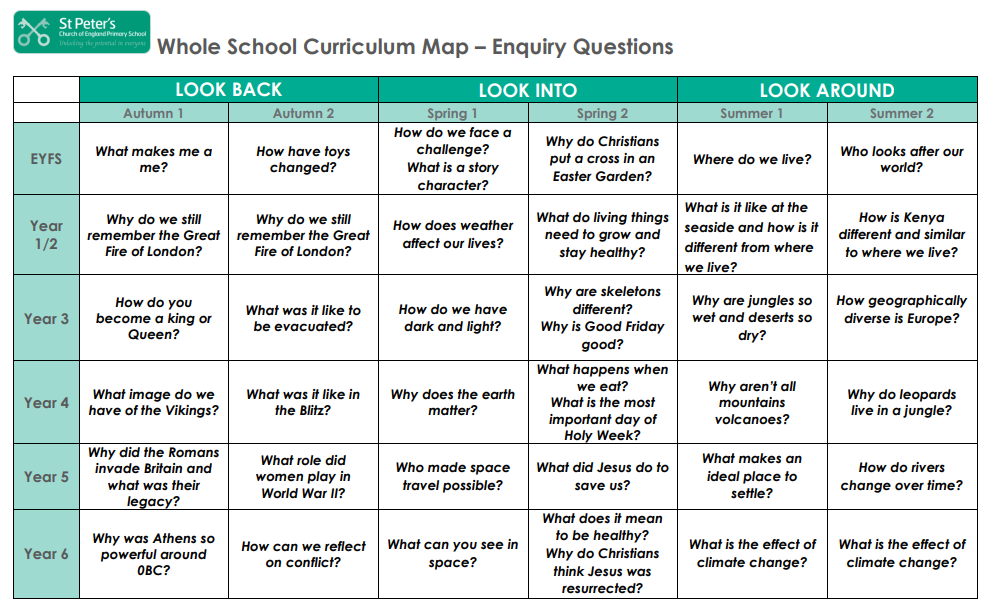
Our curriculum is organised around whole-school themes that bring learning together in meaningful ways. In the Autumn term, Looking Back focuses on History; in the Spring term, Looking Into explores Science; and in the Summer term, Looking Around centres on Geography. Alongside these themes, shared whole-school projects, such as World War II, Space and Easter, create opportunities for collaboration across year groups and help strengthen our sense of community.
Every project begins with an enquiry question designed to spark curiosity and inspire deeper thinking. Wherever possible, learning leads to an authentic outcome, giving children a real purpose for their work. Subjects are thoughtfully connected when this enhances learning, allowing pupils to see meaningful links across the curriculum while ensuring disciplinary knowledge remains strong.