


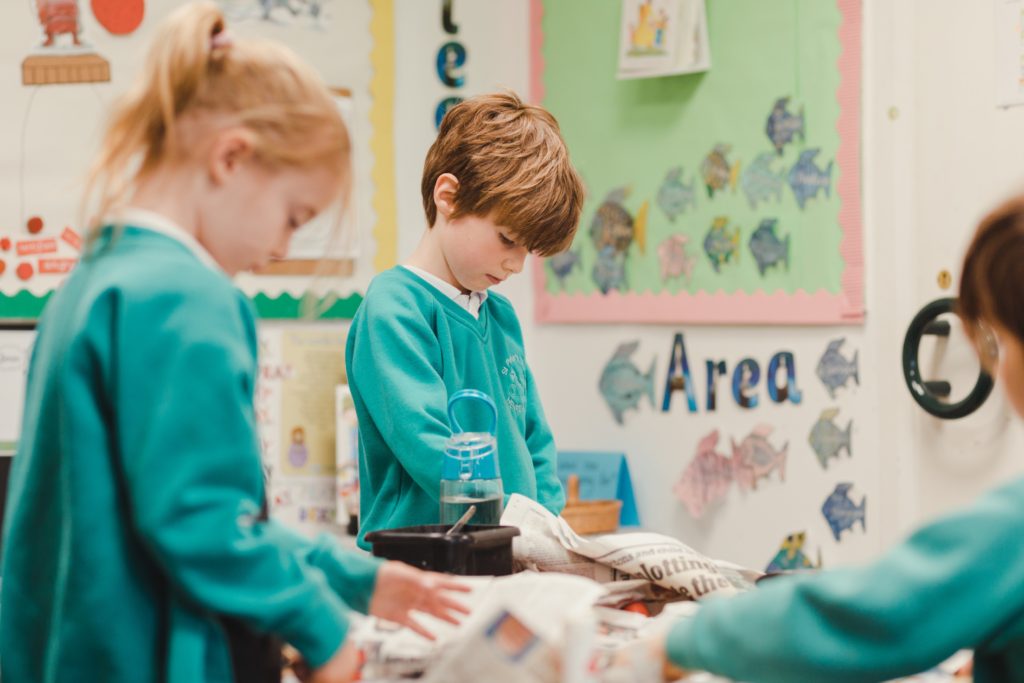
Art
Our intent
Our curriculum for art aims to develop learners who can think creatively, express their ideas with confidence and experiment with a range of materials, techniques and processes. In line with the National Curriculum in England set by the Department for Education, pupils learn to develop their artistic skills in drawing, painting, sculpture and other forms of art and design.
Children are encouraged to experiment, think creatively and reflect on their work. They learn about a diverse range of artists and designers, helping them understand how art reflects and shapes the world around us. By the end of primary school, pupils will feel confident expressing their ideas creatively and appreciate the value of art and design.
What pupils will learn
EYFS: explore a range of materials (paint, clay, collage) through play, develop fine motor skills and mark-making, express ideas and feelings through creative activities, begin to talk about their own and others’ creations.
Year 1: use drawing, painting and sculpture to develop ideas, experiment with colour mixing and simple techniques, learn about a range of artists and styles, begin to evaluate their own work.
Year 2: build skills in using different materials and tools, create more detailed drawings, paintings and 3D work, learn about artists from different cultures and times, develop confidence in discussing their artwork.
Year 3: improve control and precision in drawing and painting, explore texture, patten and form in more depth, study notable artists and use their work as inspiration, keep a simple sketchbook to record ideas.
Year 4: develop techniques in a range of media (including printing), use sketchbooks to plan, refine and evaluate work, learn about artistic movements and cultural influences, begin to use art vocabulary more confidently.
Year 5: refine skills and experiment with more complex techniques, create artwork with increasing independence and purpose, study significant artists and make comparisons, evaluate and improve their work thoughtfully.
Year 6: master a range of artistic techniques and styles, develop a personal style and creative voice, plan and produce final pieces with clear intent, critically evaluate their own work and that of others.
How we teach Art
Art is taught through carefully sequenced units that build pupils’ knowledge, skills and confidence over time. Lessons combine teacher modelling, practical exploration and opportunities for pupils to reflect on and evaluate their work. Children are introduced to a range of artists and artistic styles while developing techniques in drawing, painting, sculpture and other media. Cross-curricular links are made, for example with history, geography and science, allowing pupils to explore themes, cultures and ideas through creative expression.
Assessment and progress
Pupils’ learning in art is checked through ongoing formative assessment during lessons, including teacher questioning, observation and feedback as children develop and refine their work. Sketchbooks and completed pieces provide evidence of progress in skills, creativity and understanding over time.
Meeting individual needs
Learning in art is adapted to ensure all pupils can succeed. Teachers provide appropriate support for pupils with SEND through clear modelling, scaffolding, adapted resources and additional guidance where needed. Pupils with EAL are supported through visual examples, key vocabulary and practical demonstration to help them access learning. Opportunities for challenge are provided through open-ended tasks, increased independence and encouragement to refine techniques, develop ideas further and experiment creatively.
How parents and carers can help at home
- Encourage your child to draw, paint or create regularly using simple materials such as pencils, crayons, paper or recycled items.
- Visit local galleries, museums or look at artwork online and talk about what you see.
- Praise effort and creativity rather than focusing on making artwork “perfect”.
- Provide opportunities for creative activities such as crafts, model making or collage.
- Talk about different artists, styles and cultures to help develop your child’s appreciation of art.
Reosurces & useful links
Tate kids: https://www.tate.org.uk/kids
National Gallery (virtual gallery): https://www.nationalgallery.org.uk/visiting/virtual-gallery
The V&A Museum: https://www.vam.ac.uk/collections?type=featured
Arts and Culture: https://artsandculture.google.com/partner?hl=en
Draw with Rob: https://www.robbiddulph.com/draw-with-rob
The Artful Parent: https://artfulparent.com/
Documents to download
Our Art Skills Progression document can be viewed by clicking here
Year 4 Romans Project
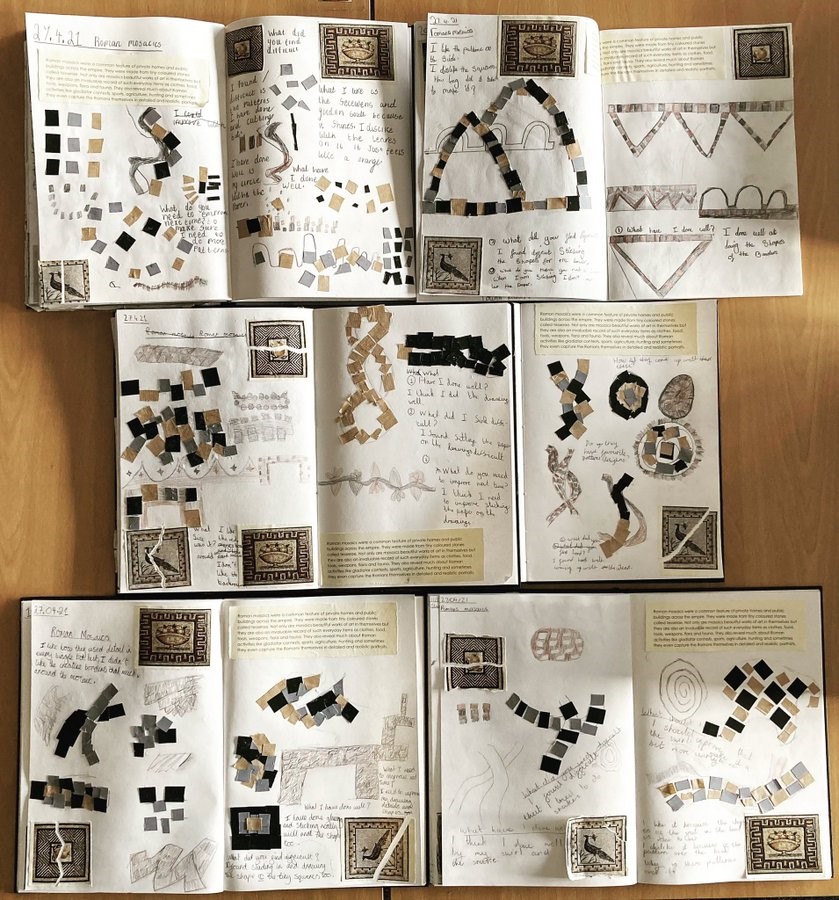
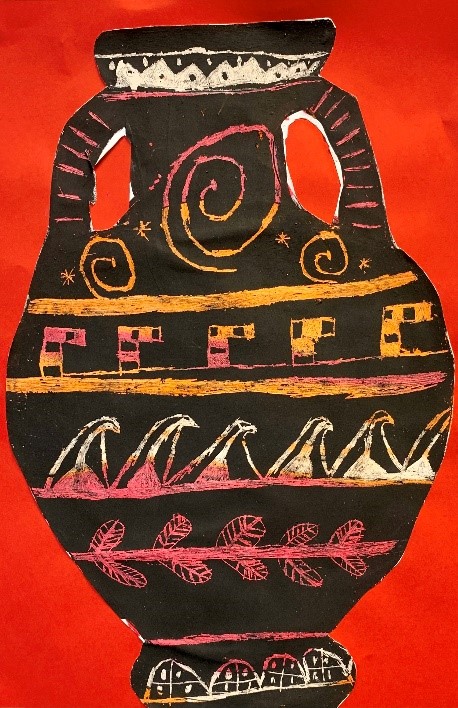
We looked at Roman Artefacts and focused on pattern work favoured by the Romans. We thought about where they got their inspiration from to create such intricate workmanship and also considered the use of pattern in storytelling.
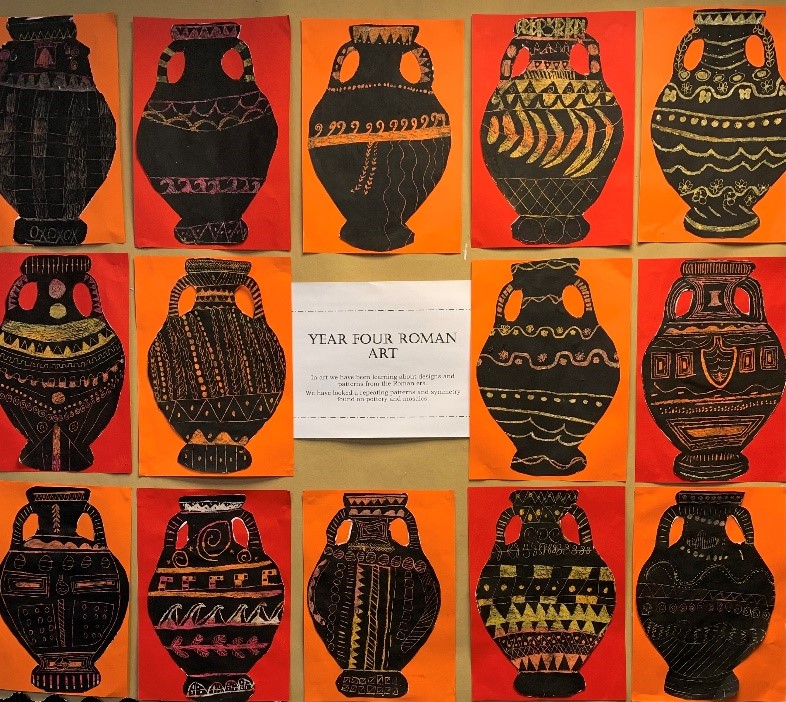
The children practised drawing patterns from natural forms and images of Roman artefacts, using both pencil and ink. They created they own mosaics designs using paper with a limited palette.
We researched Archaeologist discoveries of Roman pots and drew our own designs. We went on to create our own scratch art, this was great fun and every child’s produced a fantastic unique Roman style pot.
Subject lead
Mr K Furst
Last reviewed: 13.03.26 / KF