


Our intent
At St. Peter’s, we use Read Write Inc. to ensure every child becomes a confident, fluent reader and writer as quickly as possible. Our intent is to provide a structured, systematic approach to teaching phonics that enables all pupils to develop the skills required for reading accuracy, fluency, and comprehension.
We intend for all children to develop a lifelong love of reading, recognising that strong literacy skills are the foundation for success across the wider curriculum and in later life.
What pupils will learn
Through the Read Write Inc. programme, we aim to:
- Teach children to decode words quickly and accurately using a systematic phonics approach.
- Develop fluency and confidence in reading, enabling pupils to read a wide range of texts independently.
- Support children in becoming capable writers who can apply phonics knowledge to spelling and sentence construction.
- Build strong comprehension skills, encouraging children to understand, discuss, and enjoy what they read.
- Close gaps quickly through regular assessment and targeted teaching, ensuring all pupils keep up rather than catch up.
How we teach Phonics
At St. Peter’s, Read Write Inc. is implemented through a consistent, structured approach to the teaching of phonics, early reading and writing.
- Daily phonics teaching: Pupils in Reception and Key Stage 1 participate in daily Read Write Inc. phonics sessions where they are taught to recognise sounds, blend sounds to read words and segment sounds to spell. Lessons follow the programme’s structured sequence to ensure progression and consistency.
- Ability grouping: Pupils are assessed regularly and grouped according to their current phonics knowledge rather than age. This allows teaching to be precisely matched to pupils’ needs so they can make rapid progress.
- Consistent routines: All staff delivering Read Write Inc. follow the same teaching routines and lesson structures. This ensures high-quality, consistent phonics teaching across the school and supports pupils in developing confidence and independence.
- Reading practice: Pupils read carefully matched decodable books linked directly to the sounds they have been taught. Re-reading texts helps to build accuracy, fluency and expression while supporting comprehension.
- Writing through phonics: Children apply their phonics knowledge to spelling and sentence writing during lessons. As their knowledge develops, pupils write increasingly complex sentences using the vocabulary and language structures taught.
- Assessment and tracking: Regular assessments identify pupils’ progress and any gaps in learning. Pupils who need additional support receive targeted interventions to help them keep up with their peers.
- Staff training and coaching: Teachers and teaching assistants receive regular training and coaching to ensure the programme is delivered with fidelity and high expectations.
- Reading culture: Opportunities to develop a love of reading are promoted alongside phonics teaching through story time, exposure to high-quality texts and opportunities to discuss and enjoy books.
Through these approaches, pupils develop the skills, confidence and independence needed to become fluent readers and writers.
Assessment and progress
Read Write Inc. assessments are used to place children in the correct phonics group, monitor progress, and ensure they move through the programme at the right pace. Assessments are usually carried out by the school’s RWI lead every 6–8 weeks (more often for children who need rapid progress monitoring).
At the end of Year 1 each child will complete the Phonics Screening Check. Children will be assessed on their ability to read 20 real words and 20 nonsense words. Children who do not pass the check will be reassessed at the end of Year 2.
Meeting individual needs
Read Write Inc. is built around the principle of teaching every child at their challenge point. The programme is highly structured but also highly adaptable, which allows it to meet the needs of both moreable pupils and children with SEND. Some children may also receive 1:1 tutoring to help plug their sound gaps and accelerate their progress.
How parents/carers can help at home
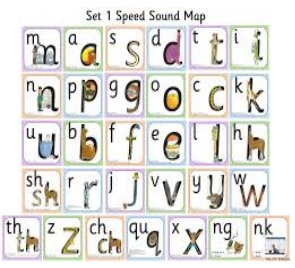
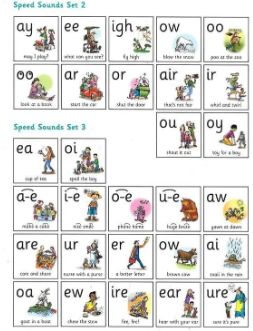
- Use pure sounds – say “m” not “muh” – say “s” like a long hiss, not “suh”
This helps children blend words quickly when reading.
- Hear their child read their book bag book three times. Re-reading the same book builds:
- Fluency
- Confidence
- Speed
- Expression
- Vocabulary
- Watch the RWI virtual classroom videos sent home on the RWI portal with their child.
- Read stories to their child – Children need both phonics practice and rich reading experiences.
Resources & useful links
- Virtual Parent Workshop
- Read Write In Parent information video Understanding phonics
- Read Write Inc Parent Information video What is phonics?
- Read Write Inc Parent Information video How to say the sounds
- Lots more praent information can be found from the Read Write Inc website
- Set 1, 2 & 3 Parent Information Booklet
- www.oxfordowl.co.uk
- www.phonicsplay.co.uk www.topmarks.co.uk/english-games/5-7-years/letters-and-sounds
- Alphablocks on BBC iPlayer
Docuements to download
Subject lead
Zoe Ellis-Somerville
Last reviewed: 16.3.2026 / ZES